How Does a House Renovation in Singapore Progress From Existing Condition to Completed Home?
20 September 2026A house renovation in Singapore usually begins with an existing space that has everyday wear, awkward layouts, or finishes that no longer suit how the home is used. The journey from “as-is” condition to a completed home is not just about replacing old materials; it is about understanding the current state of the property, defining what needs to change, coordinating the right trades, and managing each stage in a logical sequence so the final result feels cohesive and practical.
For homeowners, knowing how the process progresses can make renovation planning far less stressful. It helps you identify what decisions must be made early, what work depends on other work being completed first, and where careful coordination matters most. In Singapore, this is especially important because house renovation often involves multiple specialists such as carpenters, plumbers, electricians, tilers, painters and glass or shower-screen installers working in a controlled sequence.
Starting with the existing condition of the house
Every renovation begins with a clear understanding of the current condition. This means assessing the house room by room to note what is structurally sound, what needs refreshing, and what should be removed or reconfigured. Existing conditions can include old flooring, dated fixtures, worn paint, ageing carpentry, inefficient layouts or spaces that no longer match the household’s needs.
At this stage, the goal is not only to see what looks outdated, but also to understand what may affect the scope of work. For example, a house with previous alterations may require more careful planning than one with a straightforward layout. A clear assessment helps the homeowner and renovation team decide which areas can be retained, which should be upgraded, and which need full replacement.
Defining what the completed home should achieve
Once the existing condition is understood, the next step is to define what the finished home should deliver. Some homeowners want a more open and modern layout, while others are focused on storage, easier maintenance, better lighting or a calmer overall style. A successful house renovation is built around these priorities rather than around finishes alone.
It helps to think in practical terms: how do the rooms need to function every day, what should feel different after renovation, and which parts of the house need the most attention? Clear goals allow the renovation team to recommend suitable materials, carpentry arrangements, electrical points, flooring choices and finishing details that support the intended result.
Translating ideas into a workable renovation plan
After the objectives are set, the ideas must be translated into a workable plan. This is where space planning, layout decisions and trade coordination start to matter. For a house renovation in Singapore, the plan usually needs to show how demolition, electrical works, plumbing, carpentry, plastering, tiling, painting and final installation will connect with one another.
A practical renovation plan should consider sequence as well as style. For instance, hidden services such as wiring and piping should generally be addressed before finishes are installed. Built-in carpentry must be measured according to the final wall and floor conditions. When the plan is carefully thought through, the completed home is more likely to look consistent and function well in everyday use.
Preparing the home before work begins
Before physical works start, the house needs to be prepared for renovation activity. This may involve clearing loose items, protecting areas that will remain in use, and setting up access for workers and materials. In many homes, preparation also includes deciding what existing fittings or finishes should be removed first and what should be preserved for later use or reinstallation.
This stage may feel simple, but it affects the smoothness of the entire project. Good preparation reduces unnecessary damage, makes site access easier, and helps trades carry out their work in the right order. It also allows the renovation team to move from planning into execution with fewer disruptions.
Carrying out the core building and services works
The next phase is the most active part of the renovation, where the existing condition begins to transform. Demolition or hacking, where required, usually comes first, followed by work on services and structure-related adjustments within the agreed scope. This may include electrical rewiring, plumbing changes, waterproofing-related work in wet areas, flooring preparation, wall alterations, and initial surface corrections.
Because these works affect one another, sequence is important. Electrical and plumbing routes should be planned before closing up walls or installing carpentry. Flooring and tiling must be completed on a properly prepared base. If the house includes custom carpentry, the measurements and final details should only be confirmed once the surrounding surfaces are sufficiently stable and accurate.
For homeowners, this stage is where the house starts to feel very different from the original condition. It is often less visually finished, but it is also where the foundation for the completed home is established.
Adding finishes that shape the character of the home
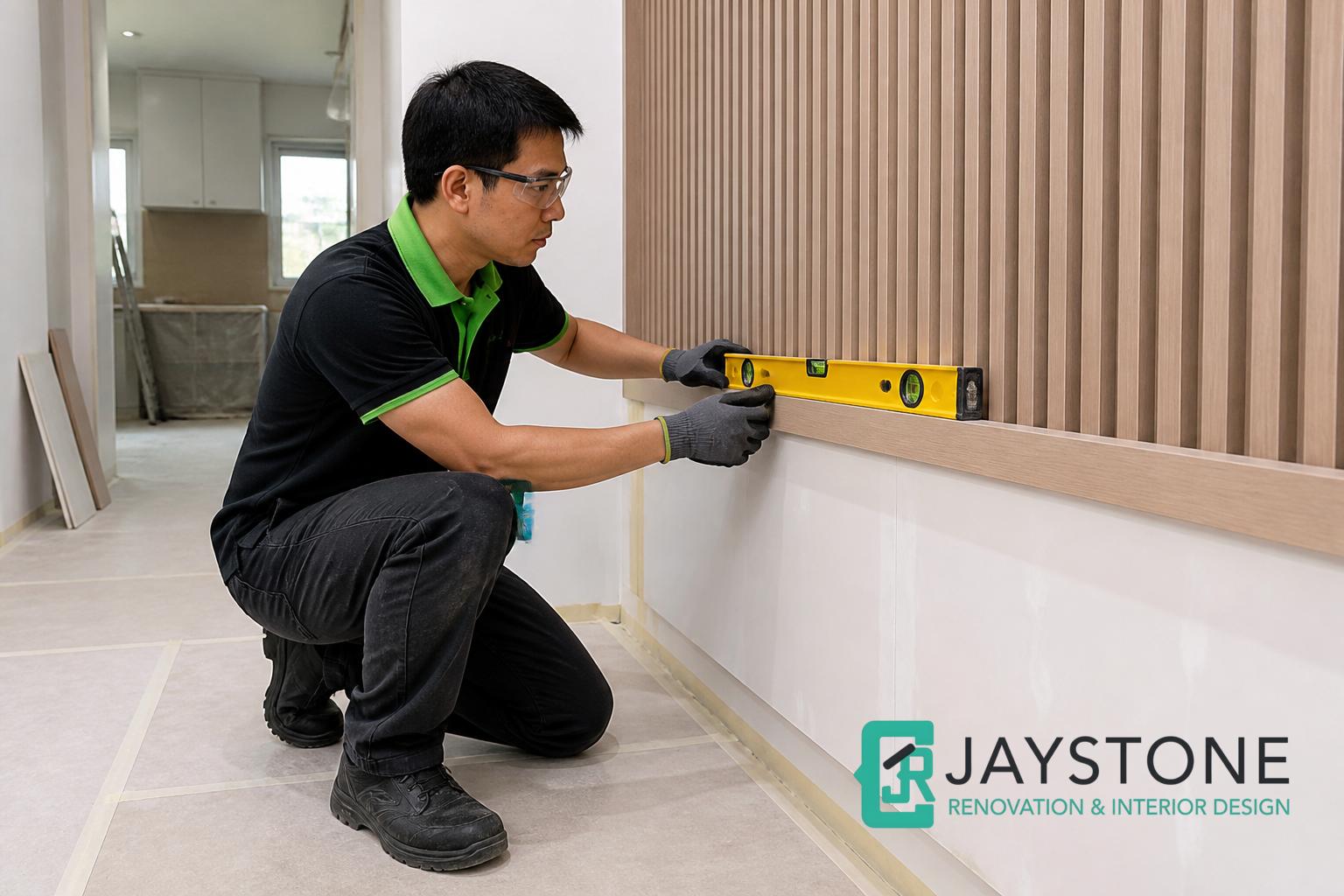
Once the core works are complete, the renovation moves into the finishing phase. This is where the house begins to resemble the final home. Painting, carpentry installation, feature walls, wallpaper, doors, glass works and final surface detailing are brought together to create the desired look and feel.
Finishes matter not only for appearance but also for daily usability. The choice of paint tone, cabinet layout, door style and surface materials can affect how bright, spacious and easy to maintain the home feels. Good finishing work also depends on the earlier stages being done properly, because even attractive materials will not look right if the underlying preparation is poor.
Checking details before handover
As the project approaches completion, the focus shifts to review and adjustment. This is the stage where the homeowner and renovation team check whether the work matches the agreed scope, whether any touch-ups are needed, and whether fittings, finishes and fixtures are properly aligned. Small issues are usually easier to address before handover than after the home is fully occupied.
It is sensible to review the house as a whole, not only individual rooms. A completed home should feel consistent from one area to another, with the finishes, storage solutions and practical details working together. This final check is an important part of turning an active worksite into a home that is ready to live in.
If you are planning a house renovation in Singapore and would like help assessing your current home condition, ideas or floor plans, you may WhatsApp Jaystone Renovation & Interior Design Singapore here: message the team on WhatsApp.
Conclusion
House renovation in Singapore progresses best when it follows a clear path: assess the existing condition, define the home’s goals, build a realistic plan, prepare the site, complete the core works, apply the finishes, and review the details before handover. When each stage is handled in the right order, the renovation is more organised, the result is easier to live with, and the completed home is more likely to meet the household’s everyday needs.
Choose Jaystone Renovation & Interior Design Singapore
Jaystone Renovation Contractor Singapore is a one-stop renovation company with years of expertise in the industry. Our renovation services include home renovation, house renovation, kitchen renovation, bathroom and toilet renovation, HDB kitchen renovation, and more. We also provide specialized services, such as carpentry, false ceiling, drywall partition, plumbing, electrician services, flooring & tiling, floor waterproofing, glass services, shower screen services and more. Additionally, we extend our services to post renovation cleaning, which includes floor cleaning, floor polishing, vinyl floor deep cleaning, tile floor cleaning, marble floor polishing, parquet floor polishing, and more.
As one of the best direct renovation contractors in Singapore, we understand the importance of quality, affordability, and transparency in every project we undertake. With direct renovation pricing and a commitment to quality, we stand as the recommended renovation contractor in Singapore. Let us bring your vision to life, elevating your space with our expertise and attention to detail. Contact us via WhatsApp at +65 8241 0032 to have renovation consultation services today!
Frequently Asked Questions
Why is the existing condition of the house so important at the start of a renovation?
It shows what can be retained, what should be replaced, and what hidden issues may affect the renovation scope. A proper assessment helps the team plan the work in the right sequence and avoid unexpected complications later.
What usually comes first in a house renovation project?
The project typically begins with assessment and planning, followed by preparation and any demolition or hacking needed within the agreed scope. After that, the renovation moves into services, surfaces, carpentry and finishing works.
How can homeowners tell if the renovation is close to completion?
Signs of completion include the main construction works being finished, finishes and fittings being installed, and the project moving into final checks and touch-ups. At this point, the home should be close to handover and ready for everyday use.
