What Is the Correct Process for an HDB Toilet Renovation in Singapore?
24 September 2026Planning an HDB toilet renovation in Singapore requires more than choosing tiles and fittings. Because the toilet is a wet area, the work sequence matters: a proper process helps reduce the risk of leaks, delays, rework and coordination issues between waterproofing, plumbing, tiling, carpentry and sanitary fittings.
Start with the toilet’s condition and your renovation goals
The first step is to understand what you want to change and why. Some HDB toilets only need a refresh of finishes and fittings, while others require a more thorough overhaul due to ageing surfaces, poor drainage, mould, cracked tiles or repeated water seepage. Knowing the current condition helps determine whether the renovation should focus on cosmetic upgrades or a full wet-area transformation.
It is also useful to define your practical needs early. For example, you may want a shower screen for better water containment, more storage for toiletries, a wall-hung vanity for easier cleaning, or slip-resistant flooring for a safer family bathroom. Clear goals make it easier to plan the sequence of work and to brief the right renovation specialist.
Plan the layout, fittings and wet-area details first
Before demolition begins, the toilet layout should be reviewed carefully. In an HDB toilet renovation, the position of the WC, basin, shower area, vanity and accessories affects plumbing routes, waterproofing detailing and how the room will function day to day. Even small changes can influence the amount of hacking, piping adjustment and tile setting required.
At this stage, it is sensible to think about the materials and fittings together rather than one by one. Select tiles, sanitary ware, taps, mirrors, storage units and shower screens with the room size and ventilation in mind. If you are working with a renovation contractor or interior designer, share reference photos and measurements early so that the proposal reflects the actual toilet space in your HDB flat.
Confirm the scope and coordinate the right trades
A well-sequenced toilet renovation normally involves several trades, and they need to be planned in the correct order. Waterproofing and plumbing typically sit near the beginning of the process, followed by tiling, installation of sanitary fittings, glass works and final touch-ups. If the scope includes electrical work for lighting or a heater, that should be coordinated carefully as well.
It is also important to be clear about what is included in the renovation scope. For instance, will the old tiles be hacked and replaced, or only overlaid? Will the basin cabinet be custom-made or off-the-shelf? Will the shower screen be framed or frameless? A detailed scope reduces misunderstandings and helps every party work towards the same outcome.
Prepare the toilet before hacking or dismantling begins
Once the scope is confirmed, the toilet should be prepared for work. This usually means protecting surrounding areas, removing existing accessories and clearing out anything that may be affected by dust or moisture. In an HDB setting, it is wise to plan access and housekeeping from the start so the rest of the home remains as orderly as possible during the renovation.
If the project involves hacking old tiles, replacing pipes or altering the shower zone, the contractor should sequence the dismantling carefully. The purpose is to expose the substrate in a controlled way, so the next stages of waterproofing and levelling can be carried out on a proper base. Poor preparation at this stage can create problems later, especially in a wet area.
Carry out waterproofing, plumbing and substrate work properly
For any HDB toilet renovation, waterproofing and plumbing deserve special attention because they affect long-term performance. The toilet floor and wet walls must be prepared properly before tiles are laid. If the substrate is uneven, damp or damaged, tiling over it without corrective work can compromise the final finish and the bathroom’s durability.
Plumbing adjustments should be done with the final layout in mind. This includes the positions of water supply points, drainage, floor trap alignment and connections for sanitary fittings. A good renovation contractor will make sure the practical sequence is followed: substrate preparation first, then waterproofing and plumbing coordination, and only then tile installation and fixture fitting.
Tile the toilet with function, maintenance and safety in mind
Tiling is more than a visual choice in a toilet. The surface should suit a wet environment, support good drainage and be easy to maintain over time. Floor tiles should work with the gradient of the room so that water flows correctly, while wall tiles should be installed neatly around corners, pipes and sanitary fixtures. Clean detailing at this stage makes the bathroom look finished and easier to keep clean.
It is also worth considering how tile size, grout lines and surface texture affect the room. Smaller toilets may benefit from a balanced tile layout that does not feel overly busy, while a well-considered tile palette can make the space appear brighter and more spacious. Practical design choices are especially valuable in an HDB toilet, where every centimetre matters.
Install sanitary ware, shower screens and storage after finishing the wet works
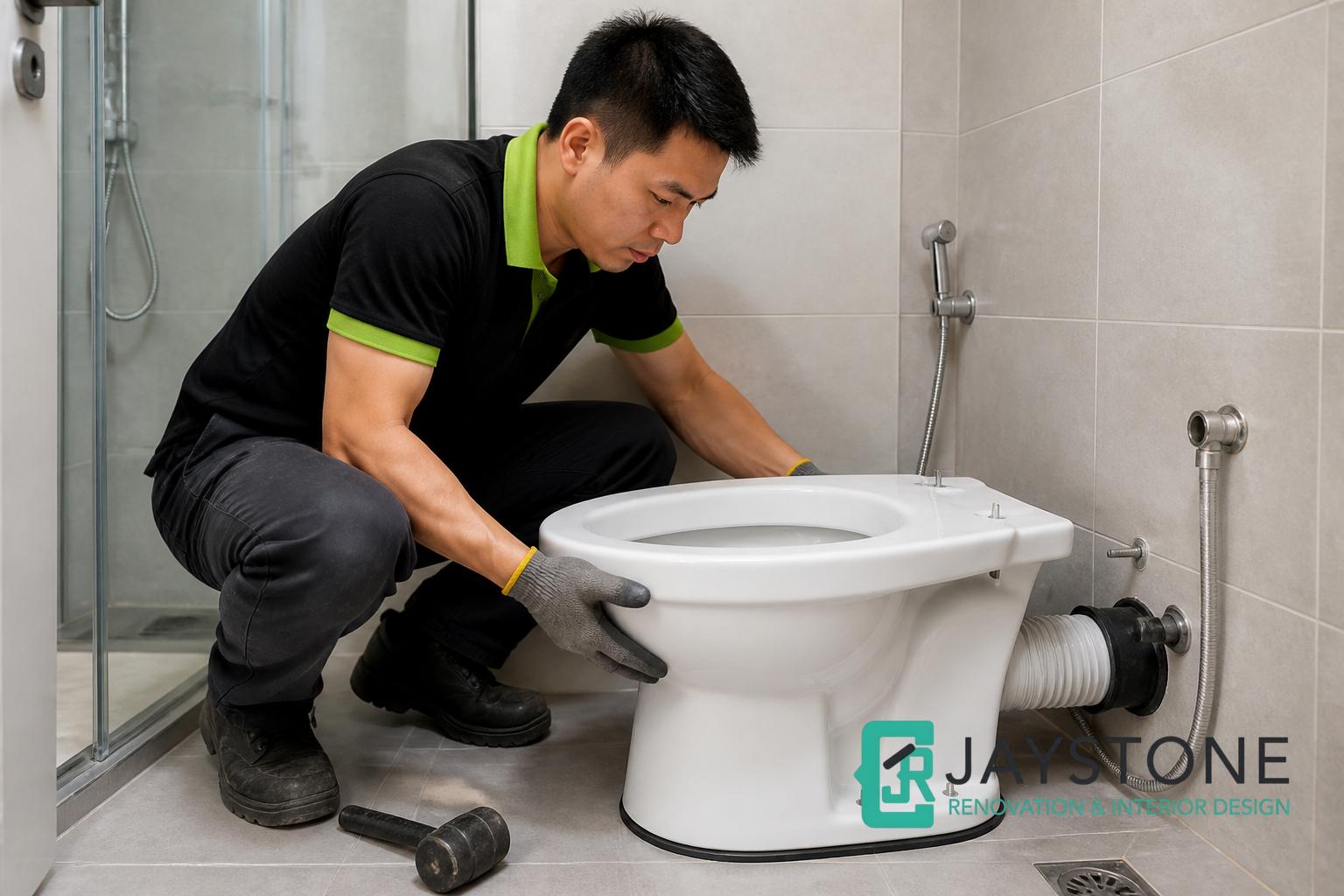
Once the tiling and curing stages are complete, the sanitary fittings and accessories can be installed. This usually includes the toilet bowl, basin, tapware, shower system, mirror cabinet, towel bars and any custom vanity or storage units. In many projects, glass and shower-screen works are added near the end so they align with the final floor and wall finishes.
At this point, careful coordination is essential. If a vanity cabinet is installed too early or without confirming pipe positions, adjustments may be needed. The same applies to shower screens, which should suit the enclosure size and opening direction. A clean installation sequence helps ensure the final toilet is practical, neat and comfortable to use.
Check finishing details and test the toilet before handover
The final stage is not just about making the toilet look complete; it is about checking function and workmanship. Test the plumbing connections, verify drainage flow, inspect sealant joints and look for uneven tile lines, chipped edges or poorly aligned fittings. Small issues are easier to correct before the job is signed off.
Homeowners should also think about maintenance at this stage. Ask how to care for the tiles, glass, fittings and vanity surfaces so the toilet stays in good condition. A proper handover should leave you with a clear understanding of what has been installed and how to look after it after the renovation is completed.
If you are planning an HDB toilet renovation and would like to compare layout ideas, finishes or the right renovation approach, you may WhatsApp Jaystone Renovation & Interior Design Singapore with your requirements, floor plan or inspiration photos here: message us on WhatsApp.
Conclusion
The correct process for an HDB toilet renovation in Singapore is a sequence of planning, preparation, waterproofing, plumbing, tiling, fitting installation and final testing. When each stage is handled in the right order, the toilet is more likely to function well, look polished and remain easier to maintain in the long term. For wet-area projects, good coordination is just as important as the chosen materials, because the workmanship behind the finishes is what protects the bathroom day after day.
Choose Jaystone Renovation & Interior Design Singapore
Jaystone Renovation Contractor Singapore is a one-stop renovation company with years of expertise in the industry. Our renovation services include home renovation, house renovation, kitchen renovation, bathroom and toilet renovation, HDB kitchen renovation, and more. We also provide specialized services, such as carpentry, false ceiling, drywall partition, plumbing, electrician services, flooring & tiling, floor waterproofing, glass services, shower screen services and more. Additionally, we extend our services to post renovation cleaning, which includes floor cleaning, floor polishing, vinyl floor deep cleaning, tile floor cleaning, marble floor polishing, parquet floor polishing, and more.
As one of the best direct renovation contractors in Singapore, we understand the importance of quality, affordability, and transparency in every project we undertake. With direct renovation pricing and a commitment to quality, we stand as the recommended renovation contractor in Singapore. Let us bring your vision to life, elevating your space with our expertise and attention to detail. Contact us via WhatsApp at +65 8241 0032 to have renovation consultation services today!
Frequently Asked Questions
What should I decide before starting an HDB toilet renovation?
Before work begins, decide on the scope, layout, fittings, storage needs and overall style. It also helps to know whether you want a full overhaul or a more limited refresh, as this affects the renovation sequence and the trades required.
Why is waterproofing such an important part of toilet renovation?
Waterproofing helps protect the structure beneath the toilet finishes from moisture and seepage. In a wet area, it is one of the most important steps because the condition of the base affects how well the toilet performs over time.
When should shower screens and vanity cabinets be installed?
These are usually installed after the wet works, tiling and major plumbing adjustments are completed. Doing them near the end helps ensure they fit the final dimensions and align properly with the completed toilet layout.
