How Does a Bathroom Renovation in Singapore Progress From Waterproofing to Final Fittings?
25 September 2026A bathroom renovation in Singapore follows a clear sequence, and getting the order right matters just as much as choosing the right finishes. From waterproofing and tiling to sanitary ware, shower screens and final accessories, each stage depends on the one before it. When the works are coordinated properly, the bathroom is less likely to run into avoidable delays, rework or water-related problems later on.
For homeowners planning a bathroom renovation in Singapore, it helps to understand what happens after the old fittings are removed and before the space is handed back for daily use. Knowing the usual progress makes it easier to check workmanship, ask the right questions and coordinate between the renovation contractor, plumber, tiler and installer.
Clearing the old bathroom and preparing the site
The process usually begins with site protection and dismantling. Existing sanitary fittings, vanity units, mirrors, shower screens, taps and other fixtures are removed. In many bathrooms, old wall and floor finishes may also be hacked away if the renovation plan calls for a full refresh rather than a simple replacement of fittings.
Once the bathroom is cleared, the team prepares the surface for the next stage. This can include cleaning away loose material, checking the substrate and identifying any uneven areas that may affect tiling or waterproofing. A properly prepared base gives the later layers a better chance of holding up well in a wet area.
Waterproofing comes before anything decorative
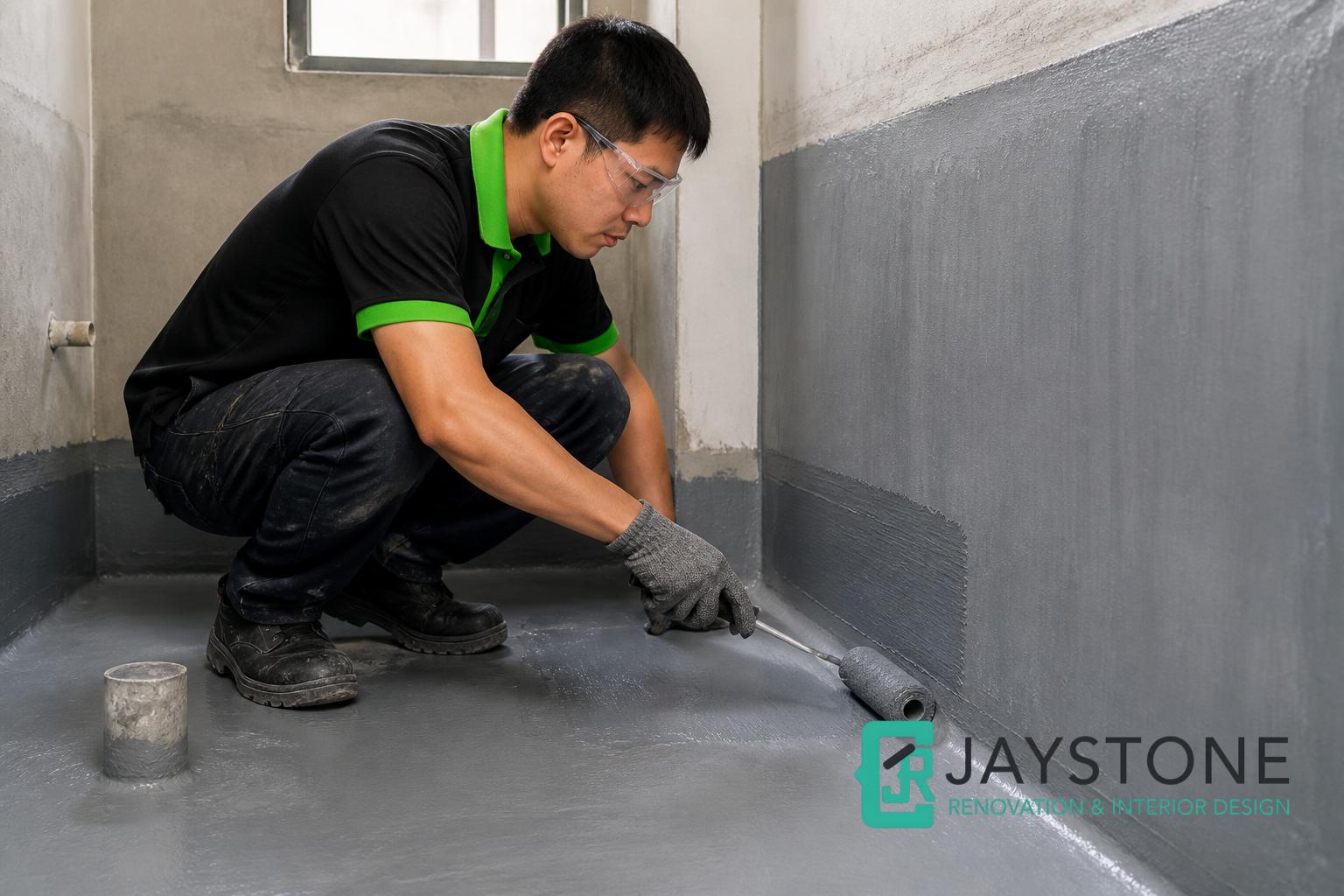
Waterproofing is one of the most important steps in a bathroom renovation because the room is exposed to constant moisture. Before tiling begins, the bathroom floor and selected wall areas are treated with waterproofing materials to reduce the risk of seepage into adjoining spaces or lower floors. In Singapore, where bathrooms are used heavily every day, this stage should never be rushed.
The surface must be suitable and properly sealed before further work continues. Homeowners should understand that waterproofing is not just a coat applied for appearance; it is a technical layer that supports the long-term performance of the bathroom. If the renovation includes a shower area, the waterproofing arrangement around that zone becomes even more important.
After waterproofing is applied, it is typically left to cure according to the contractor’s process before other works move ahead. This pause is part of the sequence and should not be treated as wasted time. It helps ensure the next layers are built over a stable base.
Tiling follows the waterproofing stage
When the waterproofed surface is ready, tiling begins. This stage shapes the look of the bathroom and also influences how easy it will be to clean and maintain. Floor tiles must be laid with careful attention to slope, especially around the shower area, so that water drains correctly instead of pooling on the surface.
Wall tiling is usually done next, although the exact order may vary depending on the design and site conditions. Good tiling work depends on alignment, spacing and proper finishing at corners, edges and transitions. In a bathroom renovation, these details matter because they affect both appearance and durability in a humid environment.
At this point, homeowners often start to see the final layout take shape. Tile selection, grout colour and edging details all influence the bathroom’s overall style. However, the space is still far from complete; the next steps are needed before any fittings can be installed securely.
Plumbing and concealed works are coordinated with the finishes
Bathrooms require careful coordination between tiling and plumbing. Before the final fittings are installed, pipe positions, floor traps, drainage points and connection lines need to match the planned layout. If a vanity basin, rain shower or bidet spray is changing location, those decisions should be settled early so that the plumbing works support the final configuration.
Concealed plumbing is particularly important because once tiles are in place, access becomes more difficult. That is why contractors usually confirm measurements, outlet positions and fitting heights before closing up the walls and floors. A small error at this stage can affect the placement of the basin, toilet or shower set later on.
Homeowners should also understand that the bathroom’s function depends on more than the visible finishes. Good coordination between waterproofing, tiling and plumbing helps reduce the chance of leaks, awkward fitments or unnecessary adjustments during installation.
Installing sanitary ware and shower fittings
After the surfaces are ready and the plumbing points are in place, the bathroom fittings can be installed. This includes items such as the WC, basin, mixer taps, shower set, bidet spray and any wall-hung or floor-mounted accessories that form part of the design. Each item has to be fixed at the correct height and aligned with the plumbing layout prepared earlier.
The shower area is often one of the final zones to be completed because it involves both water flow and enclosure details. A shower screen or glass partition may be fitted after the main wet-area finishes are ready. This helps avoid damage to the glass during earlier construction work and ensures the screen fits neatly with the finished floor and wall lines.
At this stage, the bathroom starts to become usable in a practical sense, but the work is still not fully complete. Final installation is about accuracy, not just placing items in position. Good workmanship here affects comfort, water control and the bathroom’s everyday usability.
Vanity cabinets, mirrors and accessories come near the end
Once the main plumbing fixtures are secured, the contractor can proceed with the remaining fittings such as the vanity cabinet, mirror, towel bar, toilet roll holder and shelving. These items are usually installed after the dustier and wetter works have been completed so that they are less likely to be marked or damaged.
Electrical items, where applicable, may also be arranged at this stage. If the design includes mirror lights, an extractor point or other small electrical provisions, they should be coordinated carefully with the overall layout. In a bathroom renovation, small details like these help the room feel complete and functional without clutter.
Final alignment matters here as well. A mirror fixed too high, a cabinet mounted off-centre or accessories placed without considering clearances can make daily use inconvenient. This is why the finishing phase should be checked carefully before the project is signed off.
Final inspection, sealing and touch-ups complete the handover
Before the bathroom is handed over, a final round of inspection and touch-up work is usually carried out. This may include checking water flow, confirming that fixtures are securely mounted, sealing joints where needed and cleaning up visible marks from construction. The goal is to make sure the bathroom is both visually presentable and functionally ready.
Homeowners should look out for basic practical issues during this stage, such as proper drainage, stable fittings, clean grout lines and tidy sealant work around sanitary ware and glass edges. Any minor adjustments are best resolved before the renovation is considered complete, while the site is still under the team’s coordination.
Once everything is in order, the bathroom is ready for regular use. A well-sequenced renovation should leave the space looking neat, performing reliably and easier to maintain over time.
If you are planning a bathroom renovation in Singapore and want help reviewing the scope, layout or finish options, WhatsApp Jaystone Renovation & Interior Design Singapore with your requirements, floor plan or inspiration photos: chat here.
Conclusion
From waterproofing to final fittings, a bathroom renovation in Singapore progresses in a clear order for good reason. Each stage supports the next, and skipping or rushing one part can affect the performance of the whole room. When homeowners understand the sequence, they can communicate more clearly with the renovation team, monitor workmanship more confidently and make better decisions about the finished bathroom.
A careful bathroom renovation is not only about style; it is also about moisture control, proper coordination and durable everyday use. With the right planning, the final result can be a bathroom that looks good, functions well and holds up to daily life.
Choose Jaystone Renovation & Interior Design Singapore
Jaystone Renovation Contractor Singapore stands as a premier choice for comprehensive renovation services, boasting years of unparalleled expertise in the industry. We offer direct contractor pricing – making it affordable for those looking for renovation. From kitchen renovation, HDB kitchen renovation to complete home renovation, including bathroom and toilet renovations, our services cater to every aspect of your living space. We provide a wide range of specialised services, such as carpentry, false ceilings, drywall partitions, waterproofing, floor tiling, glass services, shower screen services, plumbing, electrical works, and more. Moreover, we also provide post renovation cleaning, which includes floor cleaning, floor polishing, vinyl floor deep cleaning, tile floor cleaning, marble floor polishing, parquet floor polishing, and more.
Aside from offering top-notch services, we are also dedicated to offering you insightful articles that will enrich your understanding. With meticulous attention to detail and a commitment to excellence, we’ll bring your vision to life, transforming your environment into a reflection of your unique style and personality. Contact us for a consultation via WhatsApp at +65 8241 0032 and start on your renovation journey with confidence.
Frequently Asked Questions
Why is waterproofing done before tiling in a bathroom renovation?
Waterproofing is done first because it creates the protective layer that helps reduce the risk of seepage behind the tiles. If tiles are installed before waterproofing, the wet-area protection cannot be properly applied where it is needed most.
When are the shower screen and other final fittings installed?
Shower screens, mirrors, cabinets and accessories are usually installed near the end, after the main tiling and plumbing works are completed. This reduces the chance of damage and allows the fittings to be aligned with the finished surfaces.
What should homeowners check before the bathroom is handed over?
Homeowners should check that drainage is working properly, fittings are secure, sealant and grout lines are neat, and the finished bathroom matches the planned layout. A final walk-through helps catch small issues before the project is closed.
